Could paying less up front be better for your small business than owning every piece of equipment? The answer may depend on how often your team prints and how quickly your needs change.
When you buy, the printer becomes company property right away. A monthly rental plan lets your team use one for a set period, but ownership does not transfer when the term ends. Each path affects your cash flow in a different way.
Look beyond the starting cost. Compare ongoing costs for supplies, maintenance, and repairs, along with contract terms and access to newer technology. Your print volume, budget, growth plans, and ability to manage office equipment all shape the decision.
RentLappy helps make technology more accessible, affordable, and flexible across India. As a technology rental partner, it serves startups, corporates, freelancers, and educational institutions. Explore the options and find a choice that fits your printing needs today. The right investment should support your work, not strain your budget.
Key Takeaways
- Ownership begins right away with a purchase.
- A monthly plan provides use for a set term.
- Compare supplies, repairs, service, and contract terms.
- Match the solution to your volume and growth plans.
- RentLappy supports flexible technology access in India.
printer rental vs buying: How Each Option Works
The key difference is ownership. One path gives your team access for a set term; the other makes the device a company asset from day one. The right option depends on your needs and who will manage upkeep.

What an agreement may include
A rental agreement lets a business use a device for a defined time, but ownership usually stays with the provider. Short-term plans differ from leasing contracts, which may run for three or five years. Some agreements include maintenance, repairs, and service support, though coverage depends on the contract.
“Check what support comes with the plan before you sign.”
What a purchase means for your team
With a purchase, ownership transfers to your business right away. You gain control over setup and use, but also take responsibility for the equipment and its upkeep. This option may suit teams with clear requirements and staff who can handle routine care.
- Confirm service coverage and repair duties.
- Review the term and any exit rules.
- Match features to your office needs.
These details help you weigh the benefits of each choice before you commit.
Compare Printer Costs and Cash Flow
A low sticker price can hide costs that build over time. Compare the upfront costs with recurring payments before you choose an option. Monthly payments can protect cash flow and leave more funds for daily business needs.
For an Indian small business, the right investment depends on its budget, print volume, and plans for the equipment. Look beyond the initial cost to see how each choice affects your cash flow.

Compare payments and full ownership costs
To find the total cost, add the purchase price or rental payments, supplies, and maintenance. If you own the machine, include its possible resale value. These costs show more than the upfront price alone.
Estimate when the costs may meet
For a simple break-even estimate, divide the purchase cost by the monthly lease payment. The result suggests when cumulative payments reach a similar amount. It does not include supplies or maintenance, so treat it as a starting point.
- Use real payment and service estimates.
- Include expected print volume and supply use.
- Check how long your team will use the technology.
High volume or longer use can change which benefits matter most. Base your decision on actual printing needs, maintenance expectations, and available cash—not just the upfront investment.
Weigh Ownership Against Maintenance and Support
Owning a printer gives your team direct control over setup and daily use. It also puts upkeep on your business: you must track supplies, arrange service, and handle repairs unless you add a separate maintenance plan. That responsibility can suit teams with staff ready to manage office equipment.
Buying offers control but makes repairs your responsibility
Unexpected faults can raise costs and pause printing. Without support in place, staff may spend time finding help instead of serving customers. Consider whether your team can manage printers alongside its other work.
Rental agreements may include servicing and technical support
An agreement may include maintenance and technical support, shifting some service tasks to the provider. Coverage varies, so check the contract before you commit. Ask which repairs, consumables, configuration tasks, and response times the plan covers.
- Confirm maintenance coverage for common faults and parts.
- Check who handles supplies and device setup.
- Compare provider services with your in-house management capacity.
Included service can ease equipment care, but may not cover every issue. Read the terms closely, then weigh ownership against outside help. The best fit depends on staff skills, print demands, and how quickly your team needs a working device.
Consider Flexibility, Upgrades, and Contract Terms
A three- or five-year agreement can shape your business plans for a long time. Before choosing a printer rental or lease, check the term, monthly payments, and rules for ending early. A long commitment may limit flexibility if your needs change.
Review the monthly print allowance, too. If your team goes over its quota, extra charges can raise costs. Compare the limit with expected printing volume, and ask whether maintenance and other services are included.

Check allowances, exit terms, and upgrade timing
Some agreements let you replace equipment or get upgrades when the term ends. This can provide access to the latest technology without a new purchase. However, the timing depends on the contract, so confirm when upgrades become available and what they include.
Compare the details, not just the monthly rate. Review contracts, equipment options, and included services. Ask if you can access the latest models at renewal, and check any fees before you commit. The best option offers useful flexibility, clear terms, and solutions that suit your needs over time.
Match the Printer Option to Your Business Needs
Start with the work your team handles each day. The right device should fit your print volume, office routines, and data rules.
Consider volume, features, and data security
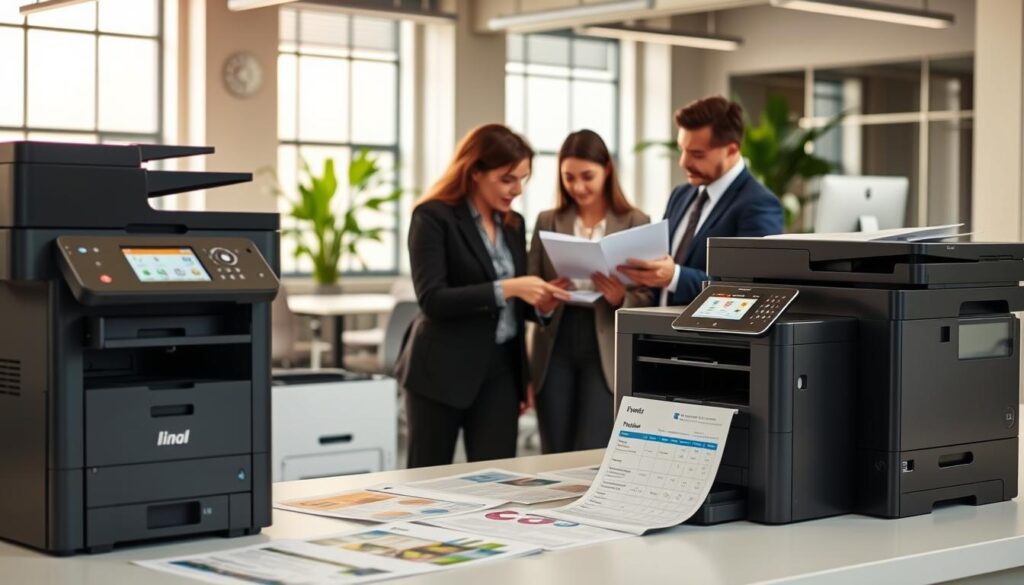
Decide if a basic model will do or if your team needs one device to print, scan, and copy. Compare duplex output, color, mobile access, and advanced scanning with actual use. These features can bring real benefits when they match daily tasks.
Legal offices may print contracts, case files, and court papers. Retail and e-commerce teams often create invoices, receipts, shipping labels, and packing slips. Businesses with sensitive files should look for user sign-in and encrypted print jobs.
Choose for your budget, growth, and IT support
Compare the cost, maintenance, and services with your budget and growth plans. If in-house IT staff can manage setup and repairs, ownership may offer more control. A rental option may suit teams that value flexibility, support, or upgrades.
Check if the agreement lets you access the latest equipment as needs change. The best choice meets current requirements without limiting future solutions.
| Work pattern | Useful features | Planning focus |
|---|---|---|
| Legal office | Secure jobs and scanning | Document privacy |
| Retail team | Fast labels and receipts | Daily print volume |
| Growing business | Mobile access and upgrades | Budget and flexibility |
Explore Printer Rentals and IT Equipment from RentLappy
One technology partner can help simplify equipment planning as your team grows. RentLappy provides printers, laptops, desktops, servers, and networking equipment across India. Its flexible solutions serve a wide range of office needs, from everyday printing to IT infrastructure.
Find equipment and support for changing needs
Founded by professionals in the IT and electronics sector, RentLappy brings more than 12 years of industry experience. The company has served 5,000+ customers in metro cities and tier-2 and tier-3 towns.
“Flexible access can help teams keep technology aligned with changing needs.”
Get guidance from the RentLappy team
Its mission is to make technology more accessible, affordable, and flexible for startups, corporates, freelancers, and educational institutions. Explore rental solutions that fit your budget, service needs, maintenance plans, and equipment management. Ask about print volume, contract terms, contracts, and the service included before choosing a solution.
- Address: D-97, Okhla Phase 1, Okhla Industrial Estate, New Delhi – 110020
- Phone: +91-60003 70013
- Email: sales@rentlappy.com
Contact RentLappy today to discuss available services and find an option that suits your business.
Conclusion
There is no single answer for every small business. Buying a printer may suit teams that value ownership and control. Renting may work better when flexibility and steady payments matter. Both options can support daily work.
Before making a decision, estimate total costs for the period you expect to use the equipment. Include supplies, maintenance, service, and contract fees—not just the upfront price. Then review print volume, support coverage, contract terms, and growth plans.
If your needs may change, rental flexibility can help. Stable needs may make ownership worth the commitment. Choose the printer solution that fits your budget, cash flow, and daily tasks. Let your workload guide the choice, and give your team the time and tools to keep work moving.